Artist Bio
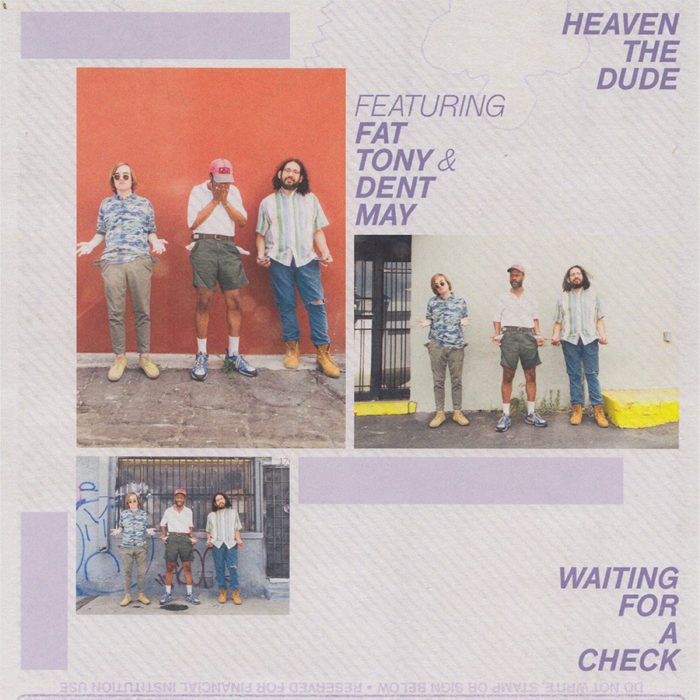
Somewhere between DJ Screw and Bad Brains, De La Soul and Scritti Politti sits Houston’s native son, Fat Tony. For the last decade, Anthony Lawson Jude Ifeanyichukwu Obiawunaotu has been everywhere: from star-making turns on the first A$AP Rocky mixtape to hosting shows on Viceland and Super Deluxe, to co-founding a DIY culture magazine to playing every worthwhile rap party in America and burning the stage down every single time. A singular and experimentally-minded rap artist adept at both traditional regional styles and indie pop, hardcore thrash, and melodic candy-painted bangers. He is punk in the platonic sense of the word: experimental and subversive, but also funny, whimsical, and virtuosic.
Over the course of more than a half-dozen LPs, and countless other short-form gems and collaborations with everyone from Das Racist to Bun B, Fat Tony has reimagined and blurred the boundaries of hip-hop. There are a few things you can depend on in this schizophrenic world. About once or twice a year, Fat Tony will drop an album and it will sound like nothing that he has done before. There’s a spirit of creative restlessness and intelligence that runs through his deep discography. He is a national treasure, one of those rappers destined to seem forever underrated until you ask around and realize that everyone in their right mind likes Fat Tony. He is the Whataburger of rappers: if you know you know.
Raised in Houston’s historically black and culturally radical neighborhood, the Third Ward, Tony’s mom and teachers educated him from the get-go about how this was the regional cradle for the Black Panther Party — and how BP hero, Carl Hampton, was murdered by the Houston Police Department. It was an environment where social awareness and Pan-Africanism were always around and celebrated. His childhood home was filled with records—country music, King Sunny Adé, and Jimmy Cliff from his father’s collection, his mother’s classical music, rock, and soul, and his granny’s gospel. Then as a teenager, empowered by the internet and his discovery of independent artists like E-40, Bikini Kill, and Bad Brains, Fat Tony began recording and distributing his own music. Heavily influenced by renowned Texas rappers like UGK and Scarface, Fat Tony started playing and organizing live shows at a time when there wasn’t much of a scene for young artists in Houston. He started booking bands of all types from all over, hand-making flyers for the shows and mailing them to addresses nabbed from the Carnegie Vanguard High School student directory.
His dedication to Houston’s rap scene earned him Houston Press Music Awards’ “Best Underground Hip Hop Artist” in 2008, 2009, 2010, and 2013. Primed for more national audiences, Fat Tony began taking his music on tour and collaborated with more artists around the country. His sonically unpredictable and emotionally vulnerable music has garnered praise from Pitchfork, The Fader, and Noisey. His achievements in rap have pushed him out of his comfort zone into other performance and hosting opportunities on TV and the Internet. This fall, Fat Tony releases Exotica on Carpark Records. It heralds his most visionary work yet, an ode to the art of storytelling through music. A rich and compact iteration of rap short fiction that firmly establishes him as his own one-man genre, the preeminent post-modern griot shooting game.
Dent May hails from Jackson, Mississippi, born and raised. He grew up singing in church and in school musicals, graduating to pop punk and emo bands in high school, before setting off East to NYU film school. After three semesters in New York, May ditched the big city and returned South, enrolling at the University of Mississippi in Oxford. There May found something like a home. Along with other local musicians, he started the Cats Purring Collective and began playing shows armed only with his ukulele. After meeting Animal Collective during the recording of Merriweather Post Pavilion at local studio Sweet Tea, the band signed May to their Paw Tracks label for his 2009 debut album The Good Feeling Music of Dent May and his Magnificent Ukelele, recorded in a double-wide trailer in the nearby hamlet of Taylor, Mississippi.
May began several self-booked tours of the album, while also booking shows at the legendary Cats Purring Dude Ranch, a converted Boys and Girls Club where he lived with several other musicians. Oxford was May’s home for two more albums, the psychedelic wedding band extravaganzas of Do Things (2012) and Warm Blanket (2013), both on Paw Tracks. In 2015, May sought sunnier skies and made the move to Los Angeles. He founded the studio Honeymoon Suite with Paul Cherry and Pat Jones, home for sessions from artists as diverse as Toro y Moi, TOPS, Magdalena Bay, and Ned Doheny.
In Los Angeles, May furthered honed his sound, embracing a more ’60s pop feel for 2017’s acclaimed Across the Multiverse and the baroque stylings of 2020’s Late Checkout, both for Carpark Records. In 2021, May was approached by the Filipino artist Eyedress, whom May had met on Twitter. Their collaboration, the hazy, sun-drenched “Something About You,” is currently certified platinum and counting. For 2024’s What’s for Breakfast?, May wielded a more stripped-down indie rock sound, without losing a drop of his natural instinct for big, sugary pop hooks.
Dent May’s new record, The Big One, finds him embracing the role of a perennial artist. He ditched his meticulous solo bedroom recording routine for several improvised sessions with Los Angeles musician friends, finding new life and energy in letting loose and relying on others. The album is a burst of bright melancholy, an acceptance of growing older and the joys and possibilities that still lie ahead. It’s the kind of album it takes a career to make, proof that May’s melodic chops have only grown sharper, his pop songcraft in a league of its own. As May says, “I hope to be on stage in a tuxedo singing my little songs when I’m ninety years old.” The world should be so lucky.